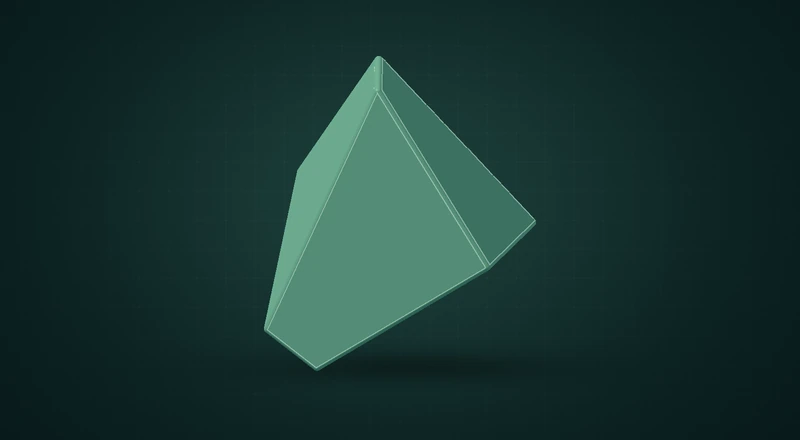
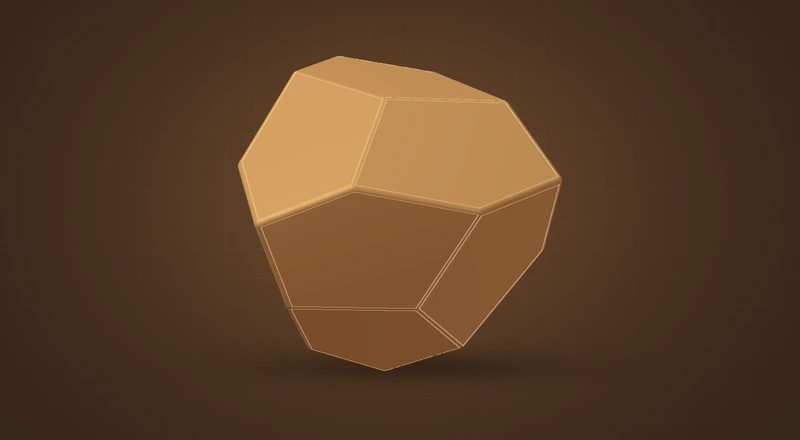
Chiral Shape
Drop the depth
Every point travels along a parallel ray to the screen. Points at different depths can land in the same place. This is an orthogonal projection.
Geometry field guide
Hold up your left hand. Its mirror image is a right hand, and no turn makes the two fit exactly. A solid with this handedness is chiral. Does its shadow keep the difference?
See how it works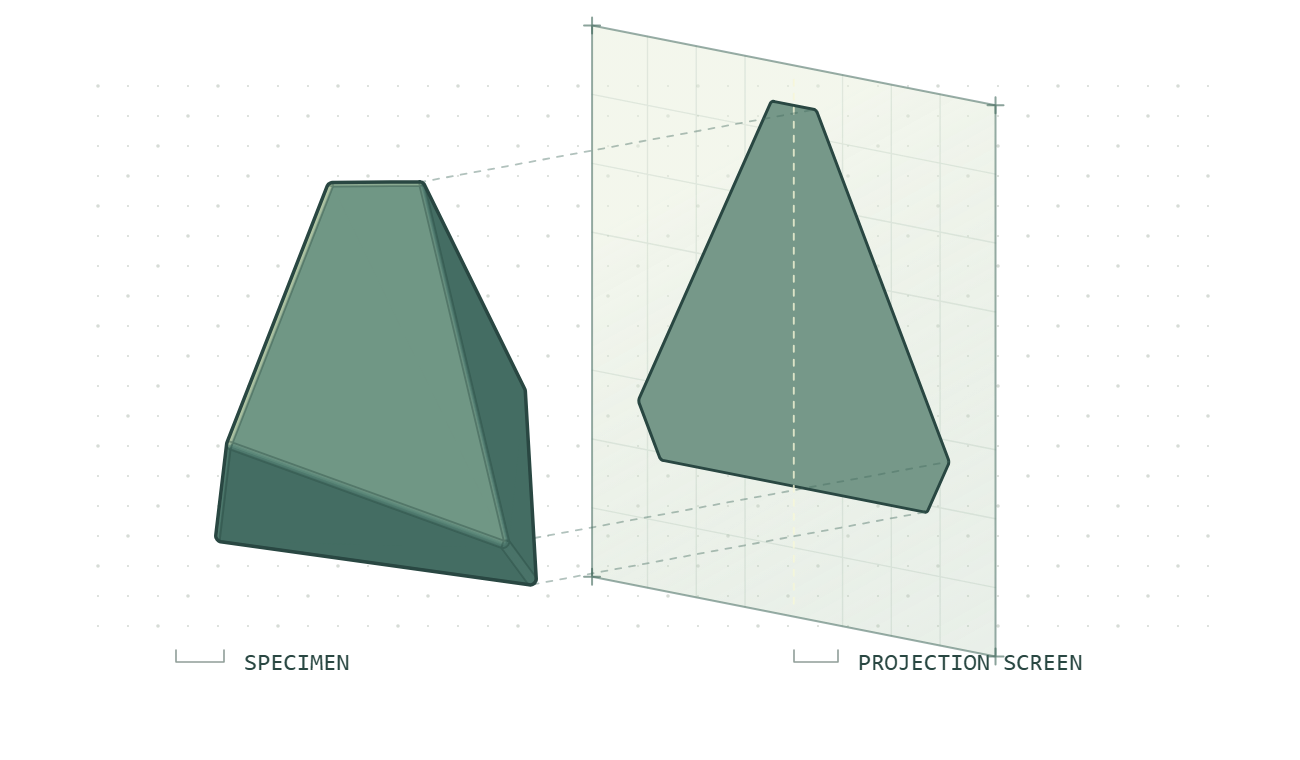
How it works
Imagine putting a flat screen behind the solid and shining light on it. Three small experiments explain what the drawings record.
Every point travels along a parallel ray to the screen. Points at different depths can land in the same place. This is an orthogonal projection.
Imagine folding the picture along the dashed line. If the halves match everywhere, the picture has bilateral symmetry. Even a narrow gap counts.
Now show the edges, including the ones at the back. A symmetric outline can surround an asymmetric drawing. Always ask which features must match.
Model studies
Follow each model from five random views to near-mirror outlines and its smallest measured shadow.